
Alternative Paris: 10 unusual things to do in the City of Light
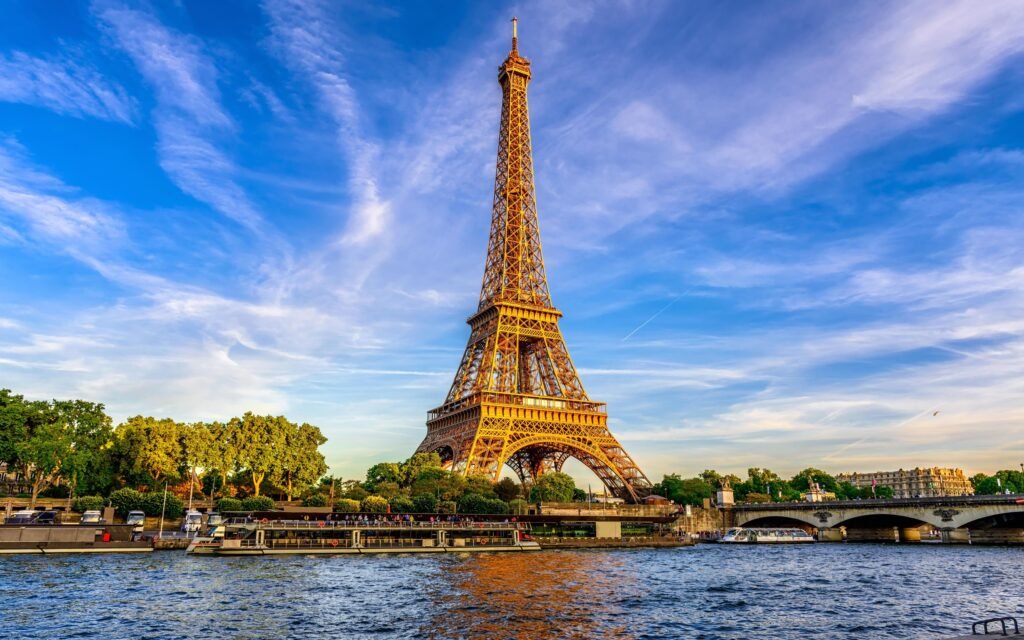
traditional tourist attractions, such as the beautiful Eiffel Tower, the Arc de Triomphe, Notre Dame Cathedral, among many other sumptuous architectural monuments.
Strolling around the Island of St. Louis
Île St. Louis is a charming river island located on the Seine (the main river that runs through Paris). It feels like a different city altogether!
The romantic island is crisscrossed by narrow streets and dotted with cozy bars, restaurants, ice cream shops, and small stores. This place, which was nothing more than a swamp in the 15th century, became the favorite spot of the so-called “Lost Generation” in the 1920s. This group was made up of artists and writers such as Ernest Hemingway, Gertrude Stein, James Joyce, T. S. Eliot, among other intellectuals.
Enjoy the festivities of the “Fête de la Musique” in Paris.
Every June 21, France celebrates the “Fête de La Musique,” or Music Festival, to celebrate the summer solstice in the northern hemisphere.
On this date, every corner of Paris is filled with music of all styles, from classical, rock, jazz, and blues to tribal music.
There are performances practically throughout the entire city, including squares, parks, museums, bars, and public streets.
Walking through the narrow streets of Montmartre
If there is a bohemian neighborhood in Paris, it is definitely Montmartre! And this attribute did not just appear today, but rather a couple of centuries ago! This is because most of the cabarets, dance halls, taverns, among others, were located there in the 19th century.
These establishments were hotspots for parties, nightlife, dance performances, and much more, as well as being the place where the artistic elite gathered. Today, the neighborhood is a little run-down, but it still retains much of its bohemian atmosphere.
The most interesting area is the upper part of the neighborhood, near the beautiful Sacré Coeur church, as it has remained somewhat untouched by the city’s modernization. Wandering through the narrow streets there is like traveling back in time!
In other words, if you want to experience an alternative Paris, Montmartre is the place to be!
In the artists’ square, you will come across a handful of painters, with easels, paper, and watercolors in hand, who will, first and foremost, offer to paint your portrait.
In the narrow streets of Montmartre, it is still possible to see a few of the once numerous windmills that existed there. Near one of these windmills is the Moulin de la Gallette restaurant, which during the Belle Époque (19th century) was a popular dance hall. The wild parties that took place there were depicted by artists such as Renoir, Van Gogh, and Toulouse Lautrec.
In fact, Van Gogh lived in a house nearby, which belonged to his brother, Théo, and still stands today.
Walking through the streets of the Latin Quarter and having a coffee at Procope
The neighborhood is named after some Roman ruins dating back to the time of the great empire (more specifically, the third century). It is a university neighborhood, and therefore quite busy and lively.
In this neighborhood, Pablo Picasso painted his most famous work, “Guernica,” while Dante Alighieri wrote his masterpiece, “Inferno,” and James Joyce wrote “Ulysses.”
Another interesting fact is that George Orwell (yes, the author of the work that inspired the creation of the “Big Brother” program!) lived here for the purpose of, in his words, “experiencing poverty.”
Also in the vicinity, in addition to these ruins, you can see the beautiful Pantheon, the Church of Saint Sévérin, as well as the Sorbonne Law School.
The Procope café, the oldest café in Paris, dates back to 1686 and was formerly a meeting place for revolutionaries and intellectuals such as Benjamin Franklin, Lafayette, Jefferson, and others.
Not far from there is Place de la Contrescarpe, a pleasant square lined with bars and bistros.
Explore the Montparnasse neighborhood and climb the Montparnasse Tower
In this picturesque neighborhood is the Montparnasse Tower, with approximately 60 floors, which offers a panoramic view of Paris. You can go up to the top floor by paying an entrance fee.
It is infinitely more advantageous to climb this tower than to climb the Eiffel Tower: firstly, because there are no long lines, and secondly, because from here, you have a privileged view of the Eiffel Tower.
Montparnasse is also a haven for painters and artists, home to several painting studios and small art galleries.
It is also worth visiting the La Coupole restaurant, whose walls were painted by artists who could not afford to pay for their meals and therefore paid with their art.
From there, you can walk to the refreshing garden of the Luxembourg Palace, built in 1650 by Louis XIII in honor of his mother, Marie de Medici.
Saint Sulpice Church
Finally, a place that Dan Brown fans will enjoy visiting is the Church of Saint Sulpice, one of the settings in the writer’s novel, “The Da Vinci Code.”
The church is nothing special, but in its outer courtyard there is sometimes a charming arts and crafts fair. One of the stalls displayed and sold wines from a winery in the south of France.
See a play at the Comédie-Française and a performance at the Opéra Garnier
The century-old Comédie-Française theater, built in 1680, was the main venue for staging the plays of the famous Molière. So, when I was there, I watched a comedy by this renowned playwright, which had a great plot and beautiful scenery, called “Le Malade Imaginaire.”
The Opéra Garnier is one of the most beautiful buildings in Paris, built in 1669 and rebuilt in 1861 in the neoclassical style, inspiring the construction of the Municipal Theaters of São Paulo and Rio de Janeiro.
This establishment is the stage for countless classical music and opera performances by composers of various nationalities.
Attending a show there is therefore an unmissable experience. However, it is only possible to take a guided tour without attending any performances.
Spend an afternoon in the Les Halles, Bourse du Commerce, and Rue Montorgueil area
It is delightful to spend a lazy afternoon wandering around this area, where you can admire the beautiful architecture of the buildings and enjoy a glass of good wine outdoors in one of the many bars.
First, you pass through Les Halles, a modern open-air gallery located on the site of the city’s 19th-century municipal market.
Practically next door is the historic Stock Exchange building. Walking a little further, you finally arrive at the charming Rue Montorgueil, full of bars and bistros.
Visit the Musée d’Orsay, Musée de l’Orangerie, Musée Marmottan, and Musée des Beaux-Arts in Paris
Most people who go to Paris visit the Louvre, which is amazing, of course. However, not everyone visits the smaller museums, which are just as interesting as the Louvre.
Some of them are Orsay, Orangerie, Marmottan, as well as the Paris Art Gallery.
The Musée d’Orsay houses an outstanding collection of paintings by the greatest exponents of Modernism, such as Monet, Manet, Degas, Renoir, Van Gogh, Cézanne, Picasso, among many others.
The Orangerie is a small museum located in the Tuileries Gardens and houses Monet’s famous Water Lilies, which are large panels depicting the gardens of the artist’s home. In addition, the museum has some works by Renoir, Cézanne, and even Picasso.
Marmottan, In this museum, we can admire beautiful works, primarily by Monet, but also by Sisley, Pisaro, and Morisot. The latter was the leading female artist of Impressionism.
Paris Art Gallery; In addition to the gallery’s permanent collection, temporary exhibitions are often held there. When I visited, there was an exhibition of works from the Hermitage Museum (in Russia), featuring works by Van Dyck, Rembrandt, Ingres, Diego Rivera, among others.
Near the Pinacoteca is the impressive Madeleine Church, built in the shape of a Greek temple, whose construction was commissioned by Napoleon Bonaparte.
Have a picnic on the lawn of Les Invalides
The Hôtel des Invalides is another sumptuous Napoleonic work, built to house none other than the tomb of Napoleon Bonaparte himself. It is worth visiting the interior to catch a glimpse of the majestic tomb.
In addition, do as the Parisians do and sit in the sun on the vast outdoor lawn and have a picnic, preferably with a good wine.
Practically opposite the Invalides is the beautiful Alexandre III Bridge and, on the other side of the river, the beautiful Grand and Petit Palais, which house temporary exhibitions.