
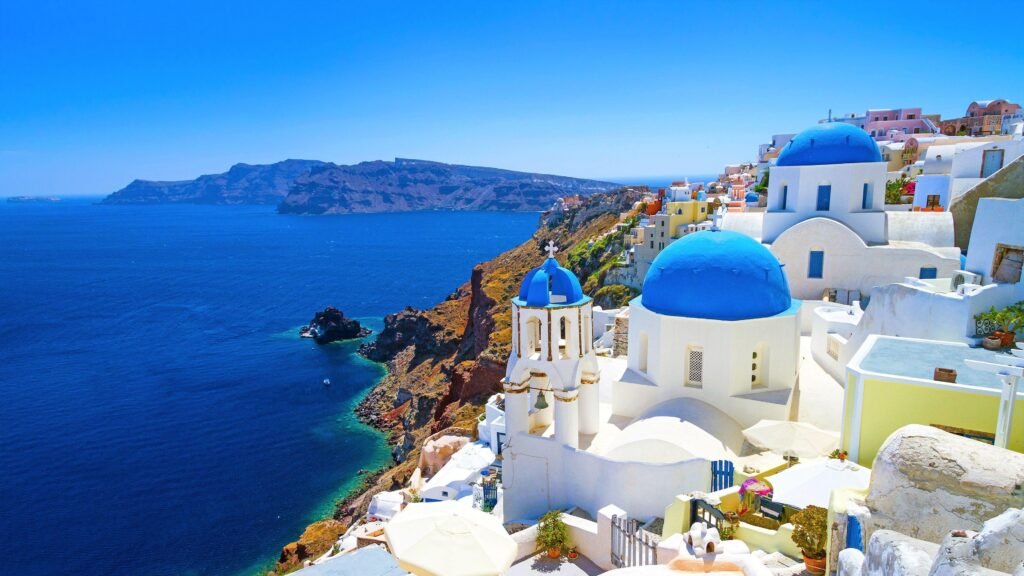
Greece is a fascinating destination. With an enviable coastline and a rich history spread out in the open air, the country reveals multiple facets, all equally captivating. Formed by a mountainous continental peninsula and hundreds of islands, this is a destination that deserves to be enjoyed at a leisurely pace. In total, there are 13 tourist regions in the country.
Attica
The Attica region is the gateway to Greece and also the most populous in the country. This area is home to important cities such as Athens, the capital and cradle of Western civilization, and Vouliagmeni, a super romantic and super tranquil place.
Surrounded by the Aegean Sea, Attica is a mix of mountainous landscapes, low plains, and an impressive coastline. Add to that the incredible number of archaeological sites found here. In fact, this region is considered the historical capital of Europe and is home to some of the most important museums and sites in the world!
Strolling through Attica is like taking a trip back in time, uncovering myths and legends thousands of years old and admiring the grandeur of Greek civilization up close. But don’t forget to take some time to explore its coastline with its transparent waters.
Central Greece
Central Greece is a picturesque region, bordered by the Ionian Sea to the west, the Gulf of Corinth to the south, and the Aegean Sea to the east. It is known for its majestic mountainous landscapes, with peaks rising over 2,000 meters, lakes, and rivers that create scenic views.
Delphi is one of the best-known destinations in Central Greece, along with Thebes and Boeotia, and their diverse cultural influences. Heading towards the coast, Galaxidi and Itea are two charming and attractive coastal towns.
Messolonghi Lagoon is a kind of Greek wetland, formed by numerous islets, dunes, and forest banks. Those who enjoy outdoor adventures will love exploring this side of Greece with its still relatively unexplored diverse flora and fauna.
Macedonia
Next, Macedonia is the largest region in the country and covers most of the northern territory. There you will see important vestiges of the kingdom of Alexander the Great, as well as unique landscapes.
Much of Macedonia’s territory is mountainous. In fact, it is here that we find the iconic Mount Olympus, which according to Greek mythology is the abode of the Greek gods. But beyond the mountains, the coastline of this region also holds some surprises.
Cyclades Islands
In turn, the Cyclades comprise the most emblematic archipelago in Greece. The volcanic islands, famous for their white houses and blue-roofed churches, are a dream destination for many travelers, especially couples in love.
Of the more than 200 islands and islets in the archipelago, only 33 are inhabited. Among them, Santorini and Mykonos stand out as the most famous. However, other destinations in the Cyclades can surprise, such as Milos, Paros, and Naxos with their extensive golden sand beaches.
Wine tourism enthusiasts will also be interested in exploring the Cyclades. The volcanic soil gives rise to grapes with a distinctive flavor. The wineries found here have sensational labels, with a taste that cannot be found anywhere else.
Dodecanese
Near Turkey, the Dodecanese archipelago is made up of 15 islands and 93 islets. The most popular and important island is Rhodes, with its medieval city, a UNESCO World Heritage Site. Incidentally, it is believed to be the location of one of the wonders of the ancient world, the Colossus of Rhodes.
The Dodecanese region also attracts attention for its cultural diversity. Governed over the years by the Romans, Ottomans, and Italians, the islands possess a series of archaeological sites scattered throughout their territory. Furthermore, the cities reflect this influence in the wide variety of architectural styles found in their buildings and constructions.
Ionian Islands
With its archipelago of 30 islands, the Ionian Islands are a surprising destination in Greece. Destinations like Kefalonia and Zakynthos are some of the most sought-after options for Brazilians to enjoy the European summer.
Known for their white sand beaches and crystal-clear waters, the Ionian Islands also have many historic cities to explore. There you will notice the Venetian, British, and French influence in cities like Corfu, Zante, and Argostoli.