
Plitvice Lakes National Park
the beautiful Plitvice Lakes National Park, one of the highlights of tourism in Croatia.
The park is one of the largest in the country and is breathtaking.
There are several lakes there, varying in size and elevation, with waterfalls connecting them to each other.
The color of the water varies between green and turquoise blue, while the bottom is visible even at a depth of 5 meters.
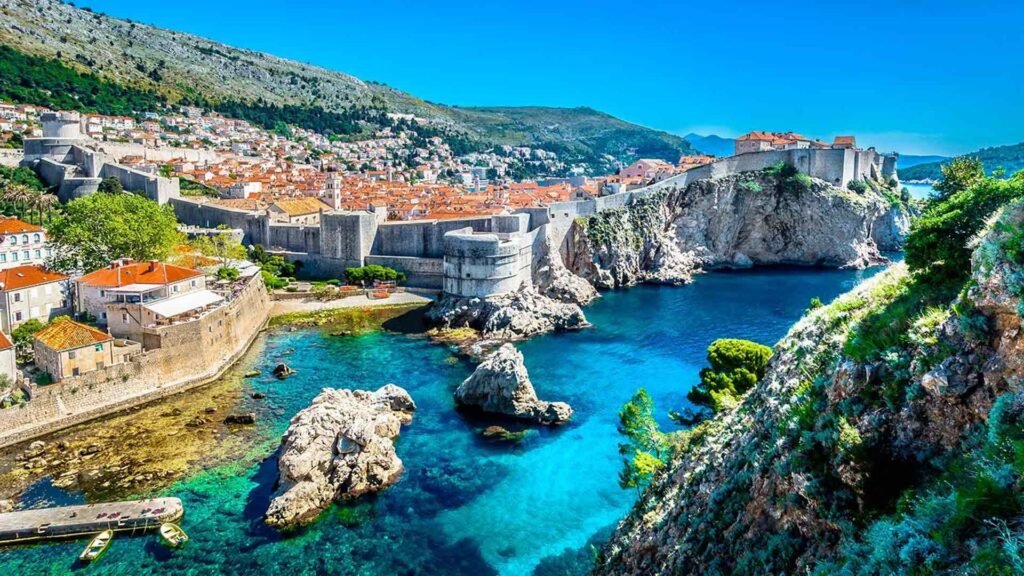
Dubrovnik
It is one of the most beautiful cities in the world!
Buza Bar for a drink (it is a bar carved into the rock, outside the city walls, on the shores of the Adriatic Sea)
The city was first built by Greek refugees from Epidaurus in the 7th century. Dubrovnik was an independent republic of Croatia and was called Ragusa, and remained so until 1918, that is, until the end of World War I, when it became part of the former Yugoslavia. It later became part of Croatia (source: Lonely Planet).
visit;
the outer walls of the city
source of Onofre
Franciscan monastery
Clock Tower
Sponza Palace
Rector’s Palace
Jesuit Monastery
Ploce Beach
Hvar Island.
Croatia had previously been occupied by the Romans. However, in the 7th century, Slavic tribes occupied the area. Later, with the Ottoman invasion of the Balkans, Croatian lands became the border between the Muslim and Christian worlds. In the 15th century, the entire coast of Croatia was dominated by the Venetians, except for the Republic of Ragusa, now Dubrovnik.
The coast also came under the rule of the Habsburgs. To free themselves from Habsburg domination, Croatia, Serbia, and Slovenia united to form Yugoslavia.
In 1991, Croatia finally left Yugoslavia. Soon after, Croatian territory was invaded by the federal army, then under Serbian rule. Thus, in the face of violent conflicts between Croats and Serbs and the occupation of the territory by Serbian militias, the United Nations intervened militarily to ensure peace.
In 1992, Croatia was finally recognized as an independent country. Since then, it has experienced vigorous economic growth (source: Wikipedia).